
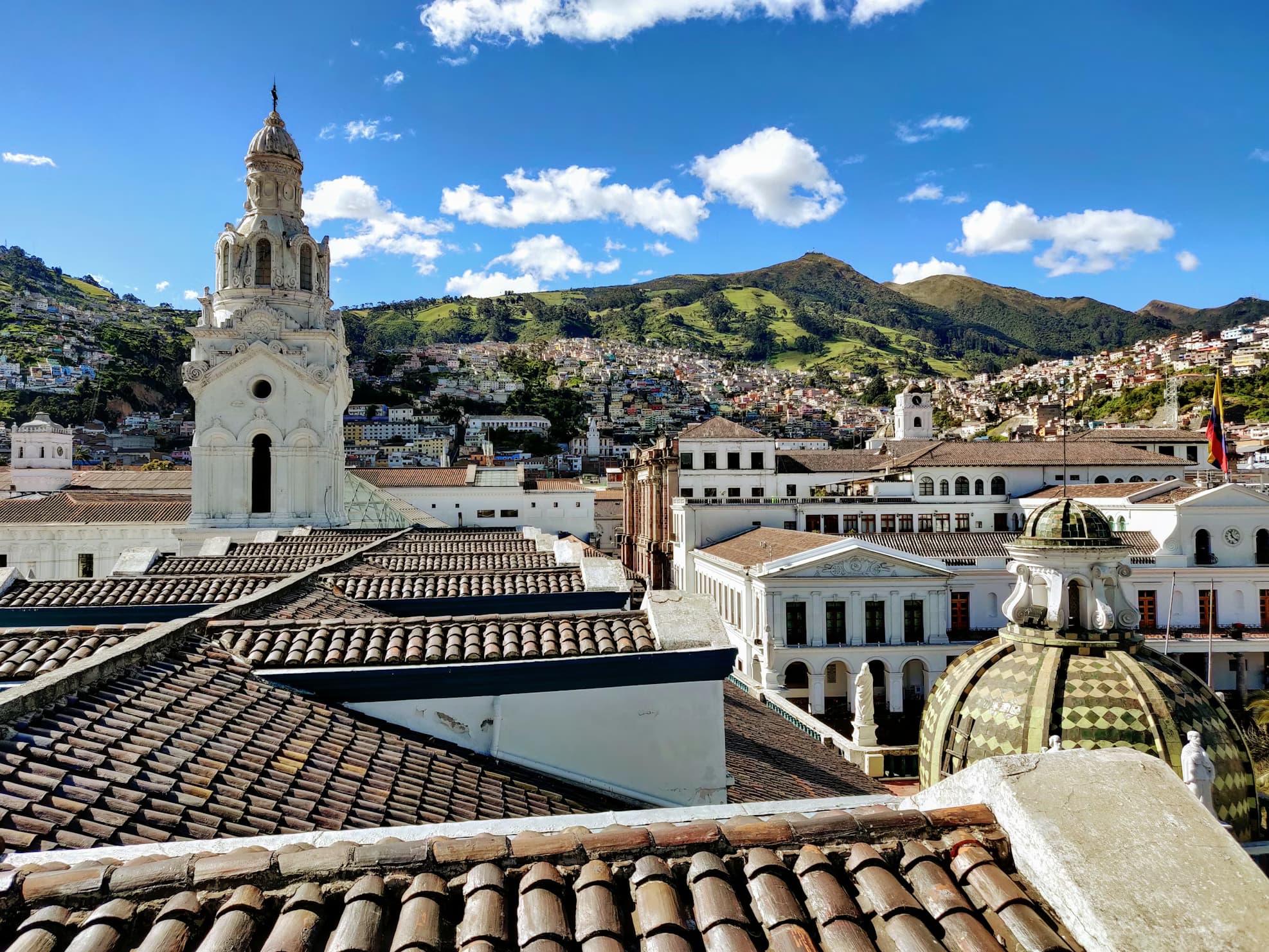
One of the lowest thresholds in the Americas
$48K of qualifying capital is among the lowest investor-residency bars in Latin America. Three flexible routes mean most clients qualify with capital they would deploy regardless.

One of the lowest investor-residency thresholds in the Americas. $48K through property, a bank deposit, or a business, US East Coast time zones, dollar-denominated economy, and a five-year path to an Ecuadorian passport.

The Ecuador Investor Visa is a two-year renewable temporary residency granted in exchange for one of three flexible $48K investments: a qualifying Ecuadorian property purchase, a certificate of deposit with a regulated Ecuadorian bank, or a productive Ecuadorian business investment. You apply through the Ecuadorian consulate that covers your US state, register at the Ministerio de Gobierno within 30 days of arrival, and receive a Cédula de Identidad (national ID). The visa converts to permanent residency at year three; citizenship petition becomes possible after a further three years of permanent residency, for a five-year total clock.
Ecuador's threshold is among the lowest in Latin America for a structured residency that leads to citizenship in five years. The dollarized economy (the US dollar has been Ecuador's national currency since 2000) removes exchange-rate risk and devaluation cycles entirely. The US East Coast time-zone alignment, the established American expat infrastructure in Cuenca, Quito, and the coastal towns, and the wide microclimate menu (Andes mountains, Pacific coast, Amazon, Galapagos) make Ecuador an unusually flexible Latin American base.
The outcomes the Investor Visa actually delivers, beyond the headline numbers. The six that matter most to our clients.
$48K of qualifying capital is among the lowest investor-residency bars in Latin America. Three flexible routes mean most clients qualify with capital they would deploy regardless.
Ecuador formally adopted the US dollar in 2000. No peso, no exchange rate risk, no devaluation cycle. Your dollars earn, spend, and bank in dollars from day one.
Two years of temporary residency convertible to permanent at year three, then three additional years on the permanent track unlock the citizenship petition. The full clock runs five years from initial grant.
Ecuador sits on UTC-5 year-round, no daylight saving. Same as US Eastern Standard Time in winter, one hour behind in summer. Remote work and US business operations stay on cadence.
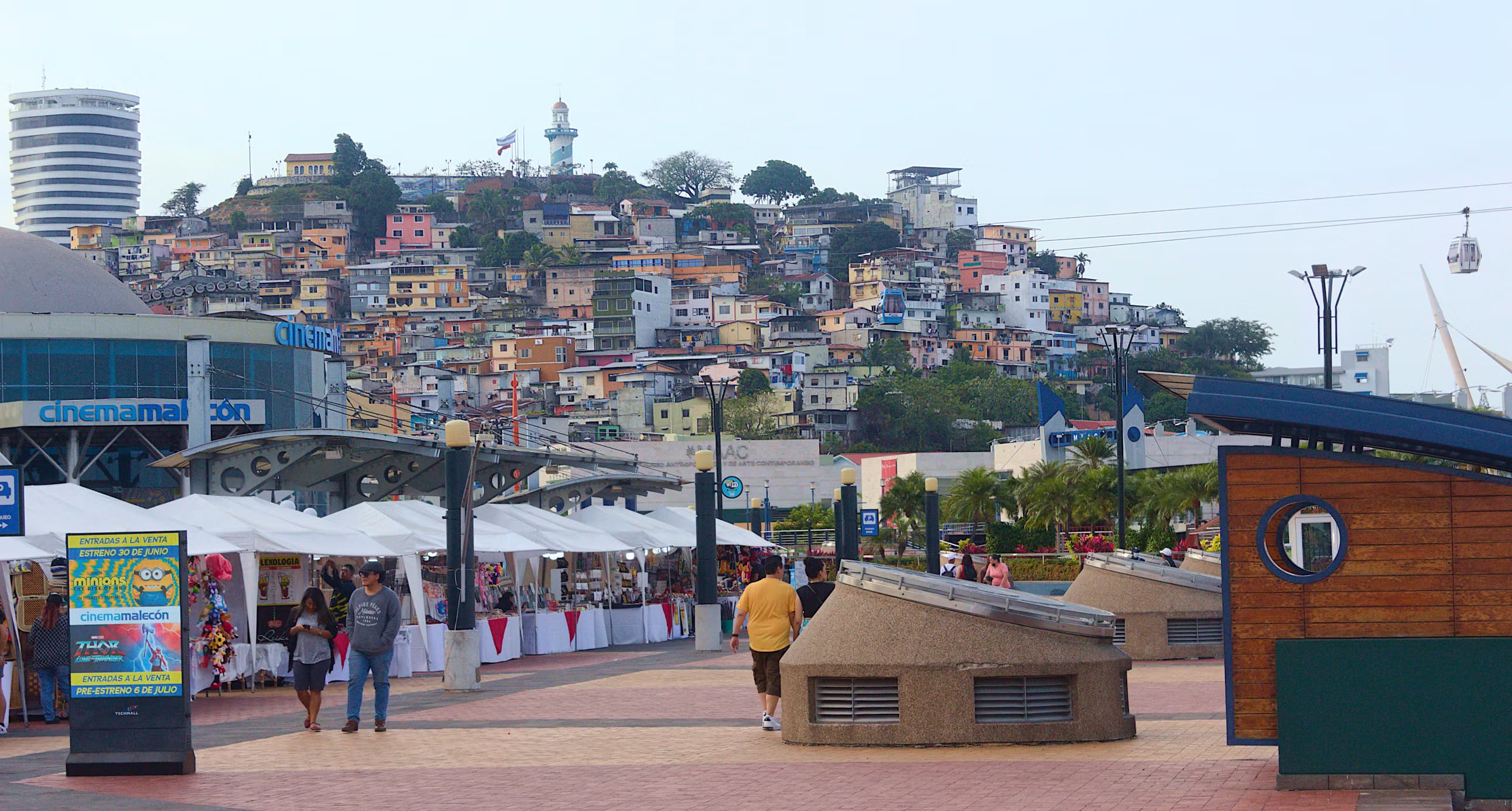
Spouse or registered partner, dependent children, and dependent parents qualify on the principal application. Each family member receives the same residency rights and the same five-year clock.
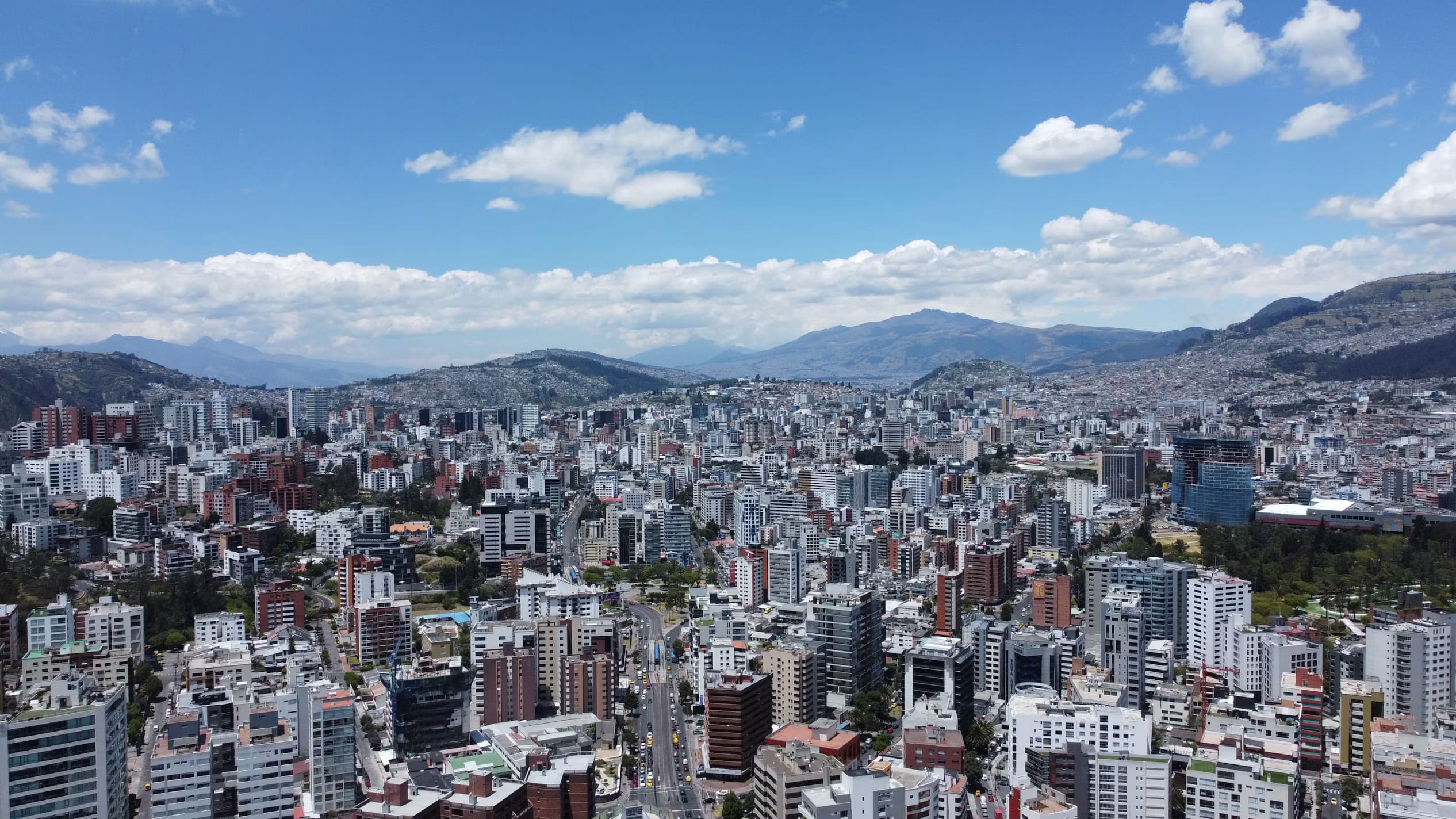
Ecuador runs 60-70% below US coastal-city benchmarks. A comfortable expat-zone life for a couple costs $1,800-2,800/month including premium housing, healthcare, and household help.
3 routes into the same residency. Each fits a different financial picture.
$48,000
Place a $48K certificate of deposit with a regulated Ecuadorian bank or financial cooperative. The lowest-friction route through the program. Capital is recoverable at maturity, subject to certificate terms. Ecuadorian deposit insurance covers up to $32K per depositor per institution.
$48,000
Acquire Ecuadorian residential or commercial property valued at $48K+ in your name. The property must be properly titled and registered with the Registro de la Propiedad. Recoverable on resale.
$48,000
Inject $48K of capital into an Ecuadorian operating company that conducts active commercial activity. The business must be properly registered with the Superintendencia de Compañías and SRI (the Ecuadorian tax authority).
Choosing the right route is half the work. We model the comparison against your portfolio in the Consult.
Reach out and tell us about your situation. From there, you'll either book a 60-minute Freedom Consult (if you're weighing options across countries) or get started on this route directly (if you already know it's the right fit).
We coordinate the document pack: FBI background check (apostilled), birth and marriage certificates, US tax returns, source-of-funds documentation, and the Ecuadorian-counsel power of attorney.
Place the $48K certificate of deposit, purchase the property, or inject the business capital. Our Ecuadorian counsel coordinates the documentation with the relevant authority (bank, Registro de la Propiedad, or Superintendencia de Compañías).
Submit the visa application through the Ecuadorian consulate covering your US state. Most consulates process complete files in 45 to 75 days.
You enter Ecuador on the visa stamp. Within 30 days of arrival, register at the Ministerio de Gobierno and apply for your Cédula de Identidad. The Cédula arrives within 30 to 60 business days.
Maintain the qualifying investment. Spend at least 180 days per year in Ecuador. At year two, the visa converts to permanent residency on application — the clock continues, not a reset.
After five total years of legal residency (two temporary + three permanent), file the citizenship petition. A basic Spanish-language assessment and a basic Ecuadorian-civics exam are part of the application.
Processing
Temporary residency
Permanent residency
Citizenship
3-6 months
Years 1-3
Years 3-5
Year 5+
How this program stacks against the closest credible options for the same visitor. We don’t earn more if you choose one over another.
| Dimension | Ecuador Investor Visa | Colombia Investor VisaLearn more | Dominican Republic InvestorLearn more |
|---|---|---|---|
| Minimum financial bar | $48K (deposit, property, or business) | $50K business or $165K property | $200K (deposit, property, or business) |
| Presence required | 180+ days / year | 2+ days / year | 183+ days / year (2 years) |
| Processing | 3-6 months | 3-6 months | 4-6 months |
| Time to citizenship | 5 years | 10 years | 2-3 years end-to-end |
| Currency exposure | USD (dollarized economy) | Colombian Peso (volatile) | Dominican Peso |
| Family inclusion | Spouse, children, parents | Spouse, children, parents | Spouse, children, parents |
| Status type | Temp → permanent (year 3) | Temporary (3-yr renewable) | Permanent on grant |
Ecuador has the lowest financial threshold of the three and the only dollarized economy. Colombia offers a low day-count rule via the Investor Visa. The DR has the fastest naturalization clock. We don't earn more if you pick one over another.
Want a four-page Ecuador PDF covering everything on this page plus the comparison framework we use internally?
Three reasons families pick Freedom Files over the do-it-yourself path or a single-jurisdiction agent.

We know the consular cadence and which Ecuadorian banks the Ministerio de Gobierno accepts for the CD route. The Investor Visa looks simple until source-of-funds documentation gets requested.

About a third of inquiries end with our recommendation against engagement. We tell you when Colombia or Panama fits cleaner.

Every engagement runs with US-licensed counsel from the first call. The dollarization makes US tax planning materially simpler than peso-based regional alternatives.
Initial residency is a two-year temporary status. At year two, the visa converts to permanent residency on application. Citizenship by naturalization can then be petitioned after three additional years of permanent residency, for a total of five years from initial grant. A basic Spanish-language test and a basic Ecuadorian-civics exam are part of the naturalization application.
The certificate of deposit must be held with a regulated Ecuadorian bank or financial cooperative, locked for the duration of the temporary-residency phase. Ecuadorian deposit insurance covers up to $32K per depositor per institution, with the remainder backed by the bank's balance sheet. We brief on bank selection during the Consult; we do not place engagements with under-capitalized institutions.
The United States taxes citizens on worldwide income regardless of residency. Ecuador taxes residents on worldwide income but offers foreign-tax-credit overlap with US obligations and excludes most pension income for retirees. Because Ecuador is dollar-denominated, the planning is materially simpler than peso-based regional alternatives.
Daily life in Cuenca's central districts, Quito's Cumbayá and La Floresta, and the major coastal expat towns runs comfortably in English at most service providers. Outside those zones, Spanish is essential. The naturalization application requires a Spanish-language assessment, which most clients build through immersion plus formal tutoring during the five-year residency window.
Cuenca, the Cumbayá and La Floresta neighborhoods of Quito, and the established coastal expat towns are statistically safer than many US small cities. Other parts of the country require situational awareness, particularly Guayaquil and certain border regions. We brief on geography during onboarding and steer engagements toward the established expat zones.
Plan on $1-2K in government and administrative fees (visa, Cédula, family-member fees), $3-5K in Ecuadorian legal fees through our partner counsel, and $500-1,000 in translation and apostille costs. Total non-investment cash outlay for a clean single-applicant engagement typically lands in the $5-8K range.
No. The United States and Ecuador both permit dual citizenship. You can hold both passports indefinitely if you complete the naturalization process.
Two paths in. If the Investor Visa is clearly the right program for your family and you’re ready to engage, contact our team directly. If you’re weighing this against other programs and want an honest read on the right move, the Freedom Consult is the sixty-minute conversation that ends the loop.
We take a small number of new families each quarter.
Most people spend 100+ hours researching residency and citizenship options before they realize they were looking at the wrong programs. We compress that into 10 questions, 90 seconds, and a single report.