
Low income threshold
$2,000/month for the main applicant. Most US retirees with Social Security plus a modest pension clear it comfortably. Spouse adds incremental amount; each dependent adds further.

Permanent residency for retirees and pensioners. $2,000/month in foreign-source passive income clears it, US Eastern time zones, and a four-year path to a Brazilian passport.

Brazil's Retirement Visa (VIPER for Aposentado e Pensionista) is granted to non-Brazilian citizens with stable foreign-source passive income – typically a US pension, Social Security, annuity, or documented retirement-account distribution. You demonstrate monthly income of at least $2,000 (with incremental amounts per dependent), apply through the Brazilian consulate, register at the Federal Police within 30 days of arrival, and receive a permanent CRNM residency card. The visa is permanent from grant; citizenship petition can be filed after four years of legal residency.
Few residency programs combine permanent status from grant with a four-year path to citizenship and a low income threshold. Brazil delivers all three. The cost-of-living delta against US coastal cities runs 60-70%, the US Eastern time-zone alignment keeps your US life cadence intact, and the lifestyle (tropical-Atlantic climate, deep beach and music culture, world-class private healthcare) consistently exceeds first-time-visitor expectations.
The outcomes the Retirement Visa actually delivers, beyond the headline numbers. The six that matter most to our clients.
$2,000/month for the main applicant. Most US retirees with Social Security plus a modest pension clear it comfortably. Spouse adds incremental amount; each dependent adds further.

The Retirement Visa is permanent from grant. No two-year temporary status, no renewal at year three. One permanent card; one continuous status.

Brazilian law allows naturalization after four years of legal residency. Dropped to two with proven Portuguese proficiency, and to one year for parents of a Brazilian-born child.

Brazil sits on UTC-3 year-round. SSA correspondence, US family communication, and US business stay on cadence with no calendar gymnastics.

Brazilian private healthcare in São Paulo and Rio is on par with major US private hospitals and a fraction of the cost. Comprehensive private insurance runs $200-400 per month.
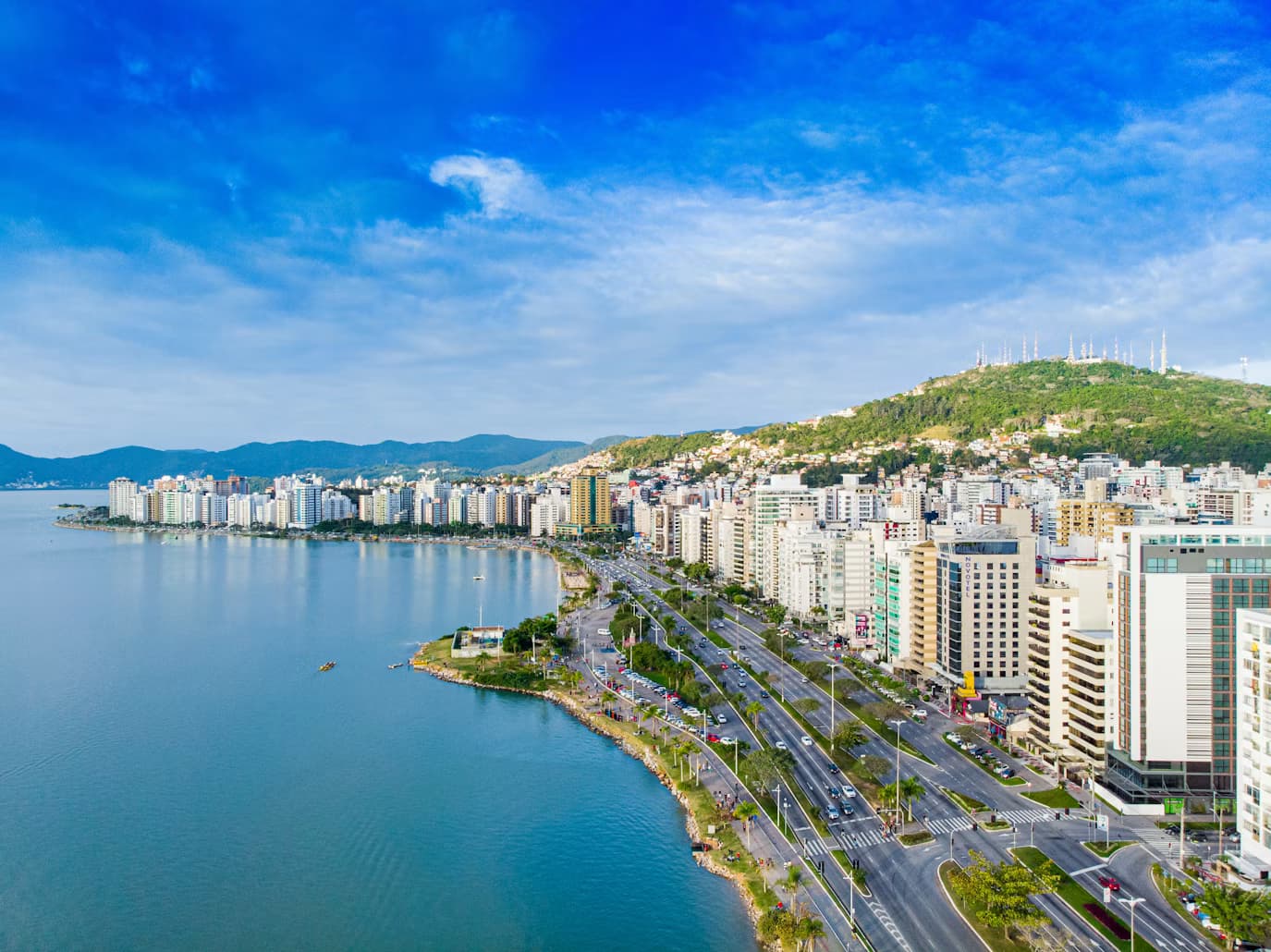
Major Brazilian cities run 60-70% below US coastal-city benchmarks. A premium urban lifestyle for a couple costs $2,500-4,500/month including ocean-view housing in Rio.
The financial threshold to qualify, with the documentation we walk every client through.
$2,000/month
Demonstrate stable foreign-source passive income at or above $2,000/month for the principal applicant, with incremental amounts per dependent. Eligible sources: US Social Security, defined-benefit pensions, military or federal pensions, annuities with documented twelve-month history, and qualifying retirement-account distributions.
Choosing the right route is half the work. We model the comparison against your portfolio in the Consult.
Reach out and tell us about your situation. From there, you’ll either book a 60-minute Freedom Consult (if you’re weighing options across countries) or get started on this route directly (if you already know it’s the right fit).
We coordinate the document pack: FBI background check (apostilled), birth and marriage certificates, SSA award letter and pension confirmations, twelve months of bank statements, US tax returns, and the Brazilian-counsel power of attorney.
Submit your visa application through the Brazilian consulate covering your US state. Most consulates process complete Retirement Visa files in 30 to 60 days.
You enter Brazil on the visa stamp. Within 30 days of arrival, you register at the Polícia Federal and apply for your CRNM. The card arrives within 60 to 90 days.
The Retirement Visa is permanent from grant – no renewal cycles. Spend at least 180 days per year in Brazil to maintain the citizenship clock continuity.
After four years of legal residency, file for naturalization. Two years if Portuguese proficient; one year if parent of a Brazilian-born child. A Portuguese-language assessment is required.
Processing
Temporary residency
Permanent residency
Citizenship
3-5 months
N/A (permanent on grant)
Years 1-4
Year 4+
How this program stacks against the closest credible options for the same visitor. We don’t earn more if you choose one over another.
| Dimension | Brazil Retirement Visa | Brazil Investor VisaLearn more | Brazil Digital NomadLearn more |
|---|---|---|---|
| Minimum financial bar | $2,000/mo passive income | $100K business or $140K real estate | $1,500/mo active income |
| Presence required | None (status maintained) | 180+ days / year | 180+ days / year |
| Processing | 3-5 months | 4-6 months | 2-3 months |
| Time to citizenship | 4 years | 4 years | 4 years (post-conversion) |
| Right to work in Brazil | No (passive income only) | Yes (your own business) | No (foreign income only) |
| Family inclusion | Spouse, children, parents | Spouse, children, parents | Spouse, children, parents |
| Capital recoverable | Income-based (n/a) | Property: yes. Business: equity | Income-based (n/a) |
The Retirement Visa fits pensioners and clients with passive income. The Investor Visa fits clients deploying capital. The Digital Nomad Visa fits remote workers in the short term but typically converts to a permanent route to reach the citizenship clock. We don't earn more if you pick one over another.
Want a four-page Brazil PDF covering everything on this page plus the comparison framework we use internally?
Three reasons families pick Freedom Files over the do-it-yourself path or a single-jurisdiction agent.

We know which consulates move SSA-only files cleanly and which bounce them for additional pension or annuity documentation. The Retirement Visa stalls at the documentation phase more than any other step.

About a third of Retirement Visa inquiries end with our recommendation against engagement. We tell you when Argentina, Costa Rica, or Mexico fits cleaner.

Every engagement runs with US-licensed counsel from the first call. SSA continues regardless of residence, but Medicare gap planning, treaty mechanics, and Roth-conversion timing all need coordination.
For most US retirees with a modest pension or annuity supplement, yes. SSA alone may clear the $2,000/month threshold for some retirees but not all; we recommend stacking SSA plus a documented pension or annuity for consular comfort. SSA continues to pay regardless of where you live; it deposits to a US bank account as usual.
To maintain the permanent residency status, no – Brazil does not enforce a minimum-day rule for visa maintenance. To keep the four-year citizenship clock running and to demonstrate the genuine connection naturalization requires, you need substantial Brazilian presence (the consensus standard is 180+ days per year).
Medicare doesn't pay for routine care outside the US. Most Brazilian Retirement Visa holders carry Brazilian private health insurance ($200-400/month) for in-country care and either maintain Part A only or pay Part B to keep US coverage available during return trips. We map this carefully at the Consult.
Once you cross 183 days in Brazil, you become a Brazilian tax resident. US worldwide-income filing continues; Brazil taxes you on worldwide income at progressive rates topping at 27.5%. The US-Brazil treaty handles double-taxation through foreign-tax credits. US-licensed counsel maps your specific picture before residency is triggered.
Jus soli applies only to direct parents of a Brazilian-born child, not grandparents. Any Brazilian-born grandchild becomes Brazilian automatically, but the accelerated one-year naturalization track applies only to the child's parents.
Plan on $2-3K in government and administrative fees (visa, CRNM, family-member fees), $5-8K in Brazilian legal fees through our partner counsel, and $1-2K in translation and apostille costs. Total cash outlay for a clean single-applicant engagement typically lands in the $8-13K range, plus accommodation deposit and lease.
Yes, though it's rare. The Retirement Visa runs the same four-year citizenship clock as the Investor Visa, so switching mid-stream resets nothing but the visa category. Most Retirement Visa clients stay on the Retirement Visa because the costs are lower and access to citizenship is identical.
Two paths in. If the Retirement Visa is clearly the right program for your family and you’re ready to engage, contact our team directly. If you’re weighing this against other programs and want an honest read on the right move, the Freedom Consult is the sixty-minute conversation that ends the loop.
We take a small number of new families each quarter.
Most people spend 100+ hours researching residency and citizenship options before they realize they were looking at the wrong programs. We compress that into 10 questions, 90 seconds, and a single report.